
Case rife with police and prosecutorial delays, violations
FOR IMMEDIATE RELEASE: April 21, 2026
MEDIA CONTACT: PDR-MediaRelations@sfgov.org
**PRESS RELEASE**
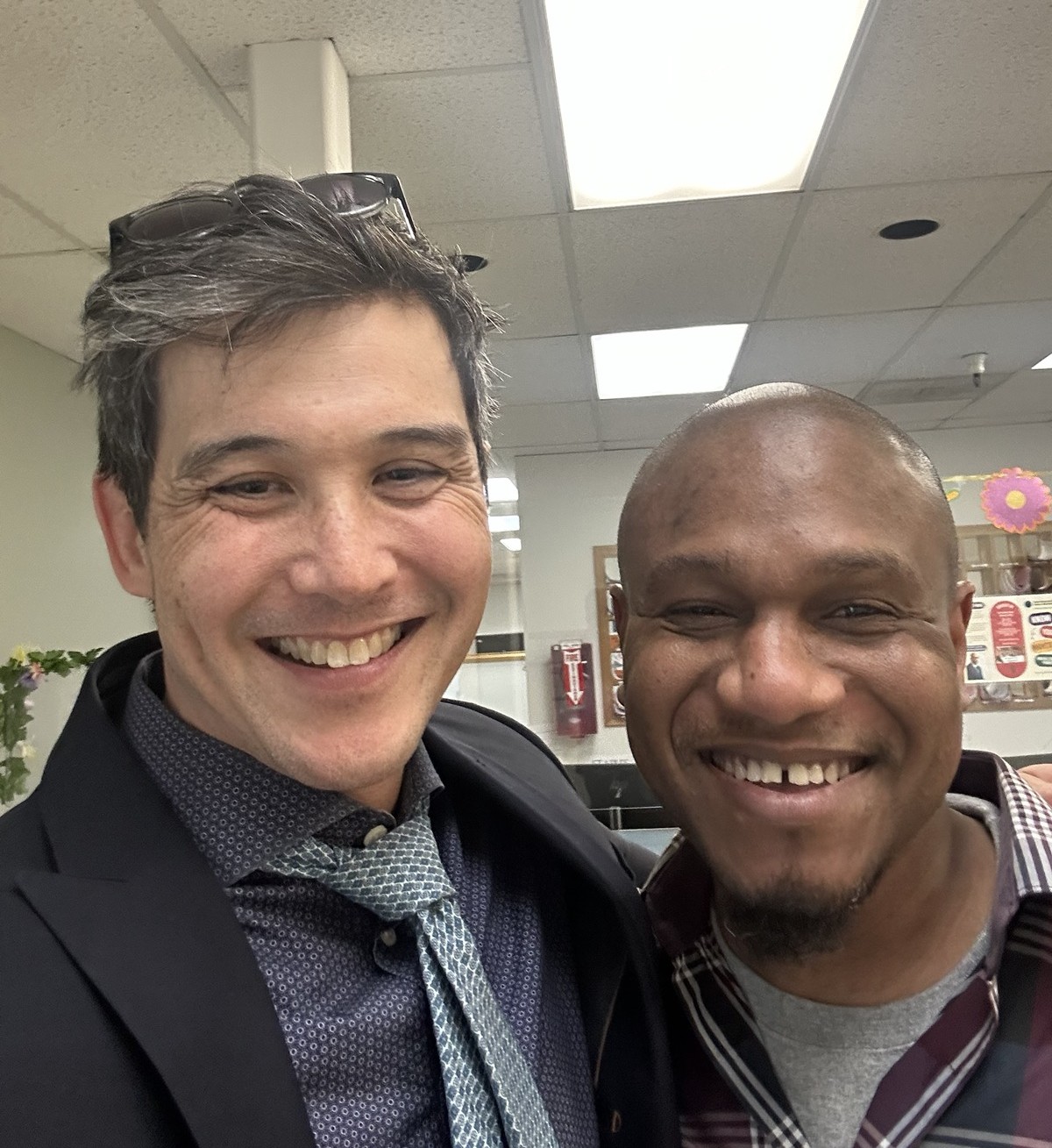
SAN FRANCISCO—On April 10, a San Francisco jury fully acquitted 38-year-old Pierre Constant of all charges after he spent more than 18 months in jail for an attack in the Tenderloin he did not commit. SFPD officers arrested the wrong person, violated police body-worn camera policies, and mishandled the photo lineup in this case. Prosecutors also failed to turn over key evidence in a timely manner, as the law requires, including DNA results that excluded Constant and medical records indicating that the victim was severely impaired on the day of the incident. Despite these issues, a judge allowed the case to proceed. At the end of a two-month trial, the jury returned not-guilty verdicts on all charges, including attempted murder, second-degree robbery, and aggravated mayhem.
“This case was a clear example of wrongful arrest and wrongful prosecution,” said Deputy Public Defender Jared Rudolph, who represented Constant. “It had unreliable eyewitnesses, brazen police misconduct, and the District Attorney’s office withholding and redacting exonerating evidence. Fortunately, the jury returned the appropriate verdict.”
On Sept. 16, 2024, two men were allegedly arguing on Ellis Street when a third man tried to intervene. Video footage shows one of the men turning toward the third man and throwing what looked to be a punch, but with a blade in his fist. The victim fell, dropping his phone. The assailant picked up the phone with his bare hand and then fled on a bike. Police recovered the discarded phone nearby and tested it for DNA. Sgt. William Elieff, an SFPD investigator, obtained a single surveillance video of the incident, which he used to issue a “be-on-the-lookout” bulletin to other officers that described the suspect as a Black male, bald and clean-shaven, and in his 40s. There were other cameras in the area that could have also yielded footage of the suspect, but Elieff did not try to get that footage.
Police Mishandled Arrest, Lineup
Eight days after the altercation that sent the victim to the hospital, two SFPD officers saw Constant on a San Francisco street and arrested him as a suspect. The officers testified that they identified Constant based on “facial features and build.” One of the officers could be heard on his body-worn camera saying, “He looks close enough.” When Sgt. Elieff arrived on the scene, he directed the other officers to turn off their body-worn cameras as they were discussing the identity of the suspect, in violation of SFPD policy. When they turned their cameras back on, an officer is recorded asking Elieff, “How do you want me to write it?” before taking Constant into custody, an action that suggests officers were constructing a narrative rather than honestly reporting their actions when writing their police reports.
SFPD officers failed to follow appropriate practices for the police photo lineup they showed to the victim. Rather than selecting photos based on the suspect’s appearance in footage of the altercation, Elieff chose images based on Constant’s appearance, resulting in a lineup in which Constant stood out as the only bald (as opposed to balding), clean-shaven individual. Photo lineups are also supposed to be “blind”—meaning that only an officer who does not know who the suspect is supposed to show the photos to the victim. Elieff remained in the room when the victim selected Constant from this flawed photo lineup.
Prosecutors Failed to Turn Over Key Medical and DNA Evidence
Prosecutors are required by law to turn over evidence, in a timely manner, that supports the innocence of the person being charged. Yet the San Francisco DA’s Office failed to provide the defense with two critical pieces of evidence—medical records indicating that the victim was under the influence of substances at the time of the incident, and DNA test results that exonerated Constant. Prosecutors obtained the victim’s medical records, but before delivering those records to the defense, the DA’s office redacted sections stating that on the day of the incident, the victim was under the influence of drugs, alcohol and hallucinations—factors that could have affected his recollection of his assailant. The judge in the case ultimately ordered the DA’s Office to disclose the unredacted medical records to the defense.
The prosecution also withheld exonerating DNA evidence from the defense. Just days before the trial was set to begin, the District Attorney’s Office delivered a report indicating that Constant’s DNA was not on the cell phone handled by the suspect. Although SFPD Sgt. Elieff’s records showed that he received the DNA test results in November 2024, prosecutors did not deliver the results to the defense until over a year later in January 2026. Elieff revealed in testimony that multiple emails regarding this DNA evidence sat unanswered in his email inbox for months while Constant languished in custody.
“Juries have convicted innocent people who have been imprisoned for years before exonerating DNA evidence reveals their innocence,” Rudolph said. “In this case, it’s clear the DA and SFPD tried to bury this exonerating DNA evidence by not providing it for over a year.”
Rudolph moved to dismiss the case after this came to light, but Judge Patrick Thompson denied the motion, and also would not allow the defense to tell the jury at trial that the DNA evidence had been turned over late. Judge Thompson also gave no remedy to Mr. Constant for the prosecution redacting the victim’s medical records.
The jury sat through three weeks of testimony and reviewed all the evidence before acquitting Constant of all charges after less than four hours of deliberation.
“Our public defenders are carrying the largest workloads in the Bay Area, in part because of poor police investigations and prosecutors mishandling cases,” said San Francisco Public Defender Mano Raju, whose office has had to decline some new cases in order to manage increased workloads. “It’s wholly unethical for the District Attorney’s Office to continue its practice of turning over late discovery and to pursue charges that could have wrongfully sent Mr. Constant to prison for life.”
###